“The aim is a person who is organized to move with minimum effort and maximum efficiency, not through muscular effort, but through increased consciousness of how movement works.”
– Moshe Feldenkrais, D. Sci., 1904-1984
Feldenkrais Method® in Auckland
Gentle, personalised movement lessons in West Auckland to help you discover easier, more comfortable ways of moving.
Sometimes the answer isn’t simply to stretch more, strengthen more or try harder.
Our bodies develop habits. You might always tighten your shoulders when you concentrate, brace your back before you bend, or use much more effort than you realise when you sit, stand or walk.
Some of these patterns may have developed around an old injury, persistent pain, stress or simply years of doing something in the same way.
The Feldenkrais Method® is a gentle approach to movement and learning that helps you become more aware of how you move and discover other possibilities.
Rather than forcing, stretching or correcting your body, Feldenkrais uses comfortable movement, curiosity and attention to explore different ways of organising yourself.
The goal isn’t to teach you one “correct” way to move.
It’s to give you more options.
What is the Feldenkrais Method?
The Feldenkrais Method is a movement-based learning method that explores the relationship between your brain, nervous system and movement.
It is quite different from traditional exercise.
Instead of repeatedly practising a movement or trying to make it bigger, stronger or more flexible, we slow things down and pay attention to how the movement happens.
We might explore something as simple as turning your head, reaching an arm, rolling, breathing, sitting, standing or walking.
As you explore different variations, you begin noticing things you may never have been aware of before.
Perhaps you hold your breath when you move.
Maybe your shoulders work much harder than they need to.
Perhaps your ribs, pelvis or spine could contribute more to a movement that currently feels difficult.
Feldenkrais gives you the opportunity to notice these patterns and explore alternatives.
What if the same tension keeps coming back?
This is something I see frequently in my work as both a massage therapist and Feldenkrais practitioner.
You have a massage or another hands-on treatment and it feels wonderful.
Your neck and shoulders finally relax.
Then a few weeks later, the same tension has crept back in again.
Sometimes there may be another piece of the puzzle worth exploring.
Rather than only asking:
“Where are you tight?”
Feldenkrais allows us to also ask:
“How are you moving – and could your body organise this differently?”
You might discover that your shoulders are doing work that could be shared by your ribs and spine. You may habitually brace your neck when you’re concentrating, or use considerably more muscular effort than you need to when sitting at your desk.
It doesn’t mean you’re moving “wrong”.
Your nervous system has simply found a strategy that works.
Feldenkrais gives you the opportunity to explore whether there might be other strategies available.
Can Feldenkrais help with pain, stiffness and movement?
People come to Feldenkrais for many different reasons.
You might be interested in Feldenkrais if you:
- experience ongoing neck, shoulder or back discomfort
- live with persistent or chronic pain
- regularly experience muscular tension or stiffness
- feel restricted or awkward in certain movements
- are hypermobile and want to explore greater awareness and control of your movement
- find yourself repeatedly protecting an old injury
- want to improve your balance or coordination
- have a neurological condition affecting your movement
- want to feel more comfortable sitting or working at a computer
- want to continue moving well as you get older
- are an athlete, musician, dancer or performer interested in refining movement
- simply feel that your body is working harder than it needs to
You don’t need to be flexible, fit or “good at movement” to do Feldenkrais.
There is no perfect position to achieve and no movement you need to get right.
Feldenkrais for chronic and persistent pain
Living with pain can change the way we move.
When something hurts, it makes sense that we protect it.
You may begin avoiding particular movements, bracing before you move, holding yourself differently or relying more heavily on other parts of your body.
Sometimes these protective strategies remain even after circumstances change.
Feldenkrais provides a gentle environment in which to become curious about these movement patterns without forcing through discomfort.
Rather than focusing only on the painful area, we look at how your whole body participates in movement.
The question becomes less about “fixing” the painful part and more about discovering whether there are other, potentially easier ways of organising movement.
Feldenkrais isn’t a medical treatment for chronic pain and doesn’t replace appropriate medical or allied-health care. It can, however, provide another way of exploring your relationship with movement when pain has become part of the picture.
Feldenkrais for posture, balance and easier movement
Posture isn’t something I think you need to constantly “correct”.
There isn’t one perfect posture that everybody should hold all day.
Instead, I am interested in whether you can move easily between different positions and whether your skeleton can support you without your muscles constantly working overtime.
Through Feldenkrais we can explore how your head, ribs, spine, pelvis and feet relate to one another in sitting, standing and movement.
Sometimes small changes in how these parts work together can make everyday activities feel surprisingly different.
The same approach can be used when exploring balance and coordination.
Rather than practising balance through effort alone, we can investigate how you sense the ground, shift your weight and organise yourself as you move.
Feldenkrais for hypermobility, HSD and hEDS
If you’re hypermobile, you may already have plenty of movement available.
The answer isn’t necessarily to become even more flexible.
Instead, it can be useful to explore how you organise and control the movement you already have.
People with generalised joint hypermobility, Hypermobility Spectrum Disorder (HSD) or hypermobile Ehlers-Danlos Syndrome (hEDS) may find that some movements feel easy while others require a surprising amount of effort.
Through gentle movement exploration, Feldenkrais can help you become more aware of where you are in space, where you tend to rely on end-range positions and how movement and effort could potentially be distributed differently throughout your body.
The emphasis isn’t on increasing your range.
It’s on exploring awareness, support, coordination and choice.
Feldenkrais does not replace physiotherapy, medical care or other appropriate treatment for HSD or hEDS, but it can sit alongside these approaches as a gentle way of exploring movement and body awareness.
How does Feldenkrais work?
One of the ideas underlying the Feldenkrais Method is that movement isn’t controlled by muscles in isolation.
Your brain and nervous system are constantly receiving information about where you are, what you’re doing and how much effort is required.
This is why Feldenkrais uses movement combined with attention.
During a lesson we might explore several variations of a movement rather than repeatedly practising one version.
Your nervous system gets an opportunity to notice differences.
This feels easier.
This requires more effort.
I didn’t realise I was holding my breath.
When my ribs move, my shoulder doesn’t have to work as hard.
The aim isn’t for me to tell your body what it should do.
It’s to create the conditions for you to notice more.
Feldenkrais and neuroplasticity
Our brains continue to learn and adapt throughout life.
This ability to change in response to experience is known as neuroplasticity.
Movement is part of that learning.
The way you walk, sit, reach, turn or balance isn’t simply determined by your muscles and joints. Your nervous system has learned ways of coordinating these actions through years of experience.
Feldenkrais uses gentle movement, sensation and attention to introduce different movement possibilities.
Rather than trying to overwrite an old habit, we’re expanding the choices available to you.
What happens in a one-to-one Feldenkrais session?
You don’t need to know anything about Feldenkrais before your first appointment.
We start with you.
There might be something particular you’d like to explore – perhaps turning your head more comfortably, walking with greater ease, reducing the effort through your shoulders, feeling more confident with your balance or simply understanding your body better.
We’ll talk about what you’ve noticed and what you’d like to be different.
From there we’ll explore movement together.
A Feldenkrais session is gentle and unhurried. There should be no forcing through pain and no pressure to achieve a particular movement.
And every session will look a little different because every person is different.
Functional Integration® – individual Feldenkrais lessons
Individual Feldenkrais sessions are known as Functional Integration® (FI) lessons.
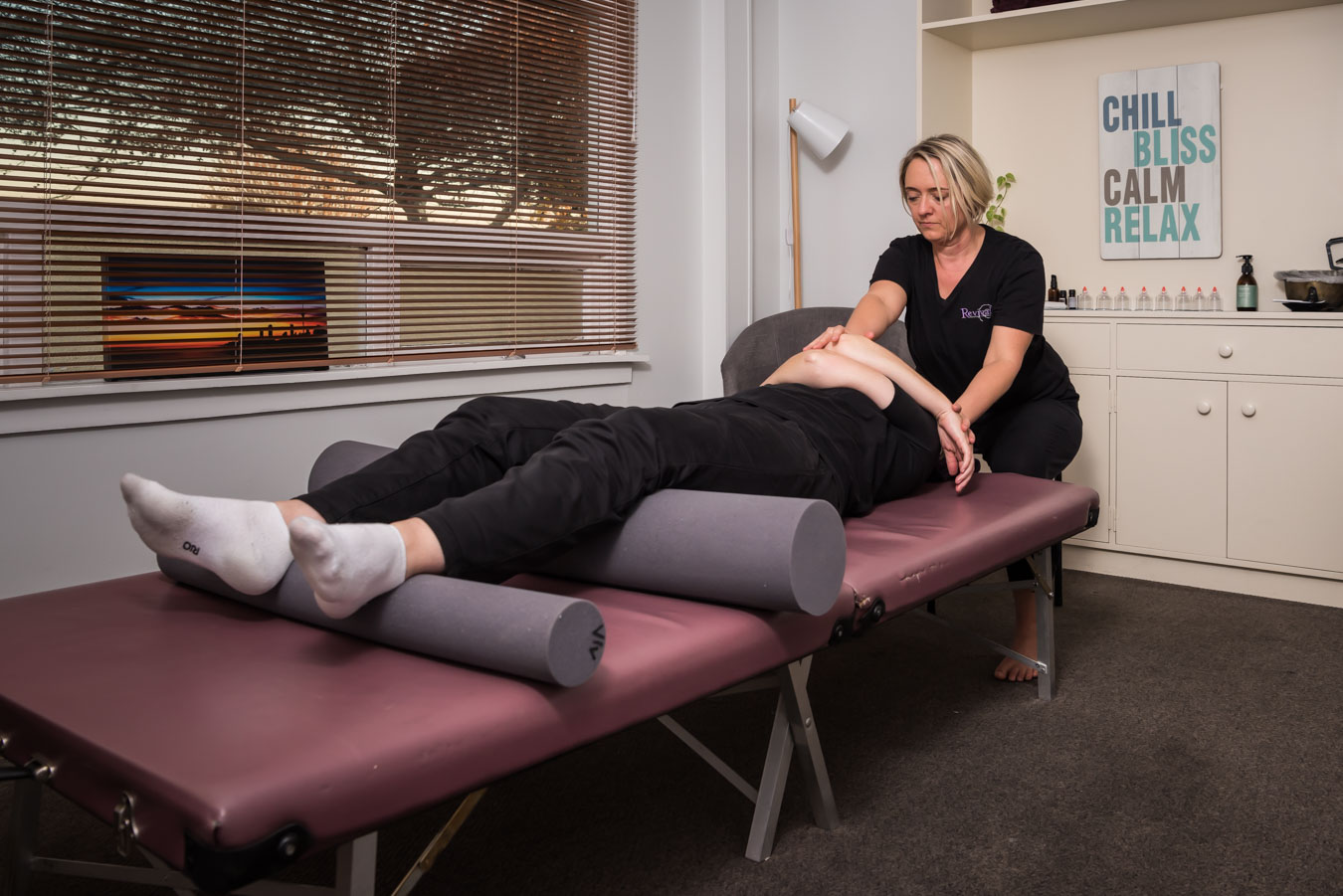
You’ll usually lie comfortably clothed on a low padded table, although we may also explore movement while sitting, standing or walking.
Using gentle, non-invasive touch and movement, I help you notice how different parts of your body relate to one another and explore alternative ways of organising movement.
Unlike massage, I am not trying to manipulate muscles or directly release tight tissue.
Instead, touch becomes a way of communicating movement information.
For example, we might explore how movement through your ribs affects your shoulder, how your pelvis and spine contribute to walking, or what happens to the effort required to sit when your skeleton provides more of the support.
Awareness Through Movement® – guided Feldenkrais lessons
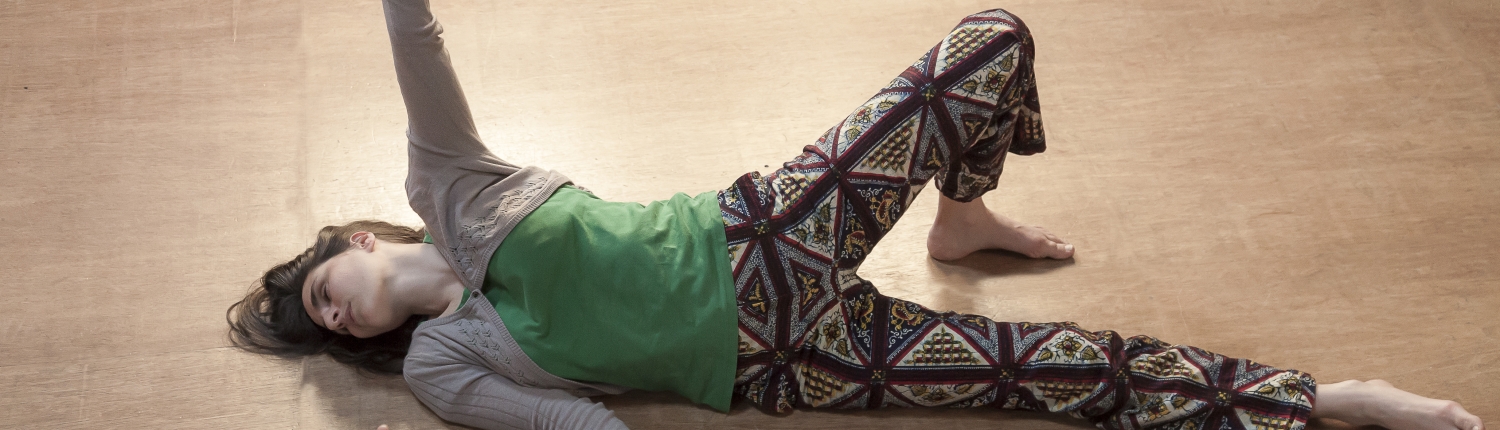
The other form of the Feldenkrais Method is Awareness Through Movement® (ATM).
These are verbally guided movement explorations that can be taught individually or in groups.
Most lessons take place lying or sitting comfortably, although some involve standing or walking.
You’ll be invited to explore small, gentle movements while noticing sensations, differences and relationships throughout your body.
There is no demonstration you need to copy and no competition to reach a particular position.
You work within your own comfortable range.
The emphasis is on learning rather than exercising.
Who was Moshe Feldenkrais?
The Feldenkrais Method was developed by Dr Moshe Feldenkrais (1904–1984), a physicist, engineer and martial artist who became deeply interested in movement, learning and human development.
Following his own knee injuries, Feldenkrais began exploring the relationship between movement, the nervous system and our capacity to learn.
His work eventually developed into the system now taught internationally as the Feldenkrais Method®.
One of his best-known ideas captures the spirit of the work beautifully:
“Make the impossible possible, the possible easy, and the easy elegant.”
Feldenkrais in West Auckland
I’m Viv Butler, a qualified Feldenkrais practitioner and massage therapist.
I offer one-to-one Feldenkrais Functional Integration® lessons at Revival Massage & Movement in Te Atatū Peninsula, West Auckland.
My background in massage and hands-on bodywork has given me many years of experience working with people experiencing pain, tension and movement difficulties.
Feldenkrais gave me another way of looking at those problems.
Instead of only looking at where someone is experiencing discomfort, we can become curious about how their whole body is organising itself.
I work with people from Te Atatū Peninsula, Te Atatū South, Henderson, West Harbour, Massey, Point Chevalier and across West Auckland.
I also offer Feldenkrais lessons from Riverhead in northwest Auckland.
Is Feldenkrais right for me?
You don’t need a diagnosis or even a clear explanation of what’s happening to come for a Feldenkrais lesson.
You might simply know:
“My shoulder always does this.”
“I feel like I’m constantly holding tension.”
“I don’t trust my balance anymore.”
“I’ve tried lots of things for my back but it keeps bothering me.”
“I’m hypermobile and I’d like to understand my movement better.”
Or even:
“I just don’t feel as comfortable in my body as I used to.”
That’s enough to start with.
Feldenkrais is about curiosity rather than correction.
Together we can explore what you’re currently doing, what else might be possible and whether movement can begin to feel a little easier.
Book a Feldenkrais lesson in Auckland
If you’re curious about whether Feldenkrais could be useful for you, you’re welcome to book an individual Functional Integration® lesson with me.
You don’t need any previous Feldenkrais experience. Come as you are, wear comfortable clothing and bring something thats going on in your body or about your movement that you’re curious to explore.
Book Online